Why Is This Home in a Flood Zone? There's No Water Anywhere Nearby.
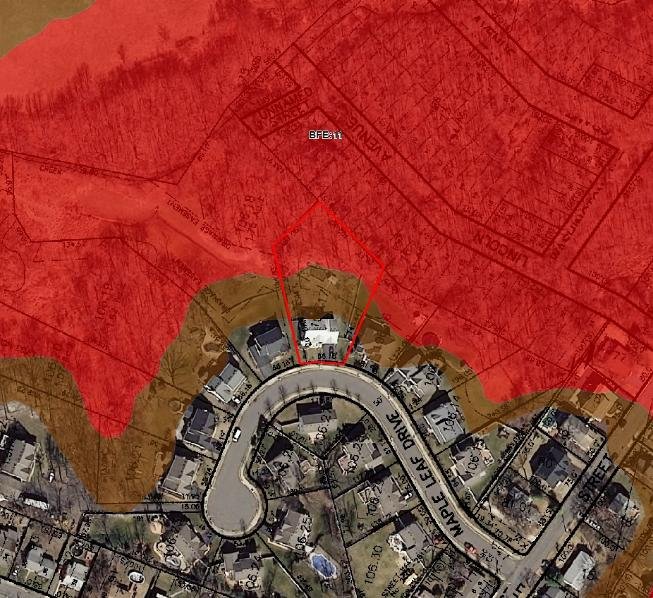
Flood Zone Map
One of my clients recently asked a great question.
A home they were purchasing came back with a flood certification indicating that part of the property was located in a FEMA Special Flood Hazard Area (Zone AE). Their immediate reaction was understandable:
"How can this be? There's no creek, river, or lake anywhere near the house."
It's a question I hear more often than you might think.
Flood Zones Aren't Just About Visible Water
Many people assume that if they can't see a body of water, flood insurance shouldn't be an issue.
In reality, FEMA flood maps are created using detailed engineering studies that evaluate much more than nearby rivers. They consider factors such as:
Elevation changes
Drainage patterns
Stormwater runoff
Historical flooding
Rainfall modeling
Watersheds and overflow areas
As a result, a property can be located within a mapped flood zone even if there isn't an obvious stream nearby.
One of the Biggest Misconceptions
Many buyers assume that if a property is "in a flood zone," the house itself must be sitting in the floodplain.
That isn't always the case.
Sometimes only a small portion of the lot extends into the mapped flood zone while the home itself is outside of it. Other times, the structure is partially affected.
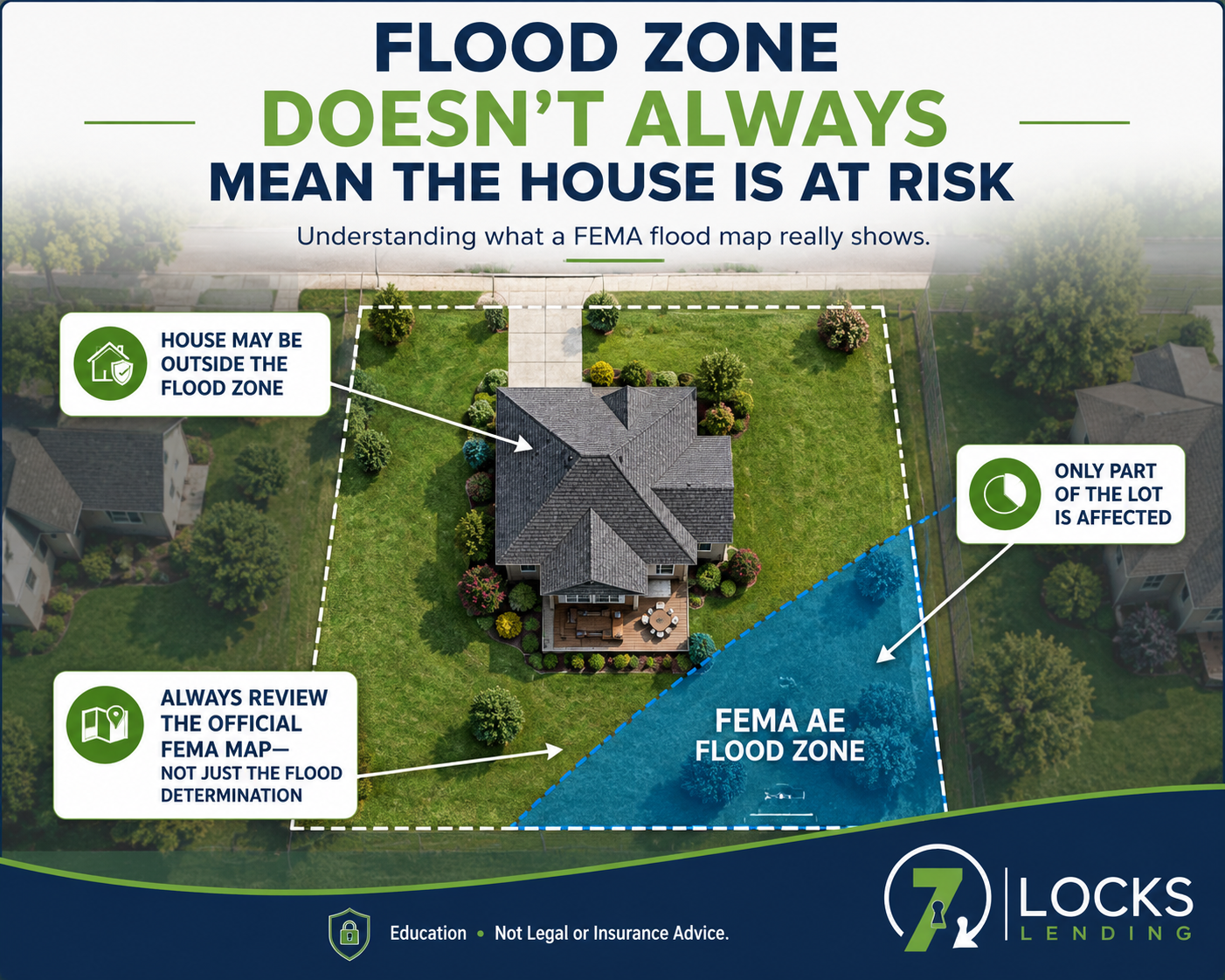
Imagine a property that looks something like this.
Only a corner of the lot is within the mapped flood zone.
The house itself may not be.
This is why it's so important to review the actual FEMA flood map rather than relying solely on the words "Property is in a flood zone."
That distinction can influence:
Whether flood insurance is required by the lender.
The cost of that insurance.
Future additions, pools, detached buildings, or other improvements.
Your understanding of the property's actual flood risk.
Never Assume—Verify
One of the biggest lessons from this experience is that assumptions can be misleading.
I've had buyers convinced a property couldn't possibly be in a flood zone because it sat on top of a hill. I've also seen homes located beside creeks that weren't within FEMA's Special Flood Hazard Area.
Every property is different.
Should Your Real Estate Agent Have Known?
This is another question that often comes up.
Experienced real estate agents often know neighborhoods that have recurring flood concerns, but they generally don't receive the lender's official flood determination before an offer is made.
That certification is typically ordered during the mortgage process through a third-party flood determination company.
Because of that, buyers shouldn't rely solely on assumptions made by anyone involved in the transaction—including themselves.
If a Flood Zone Appears During the Loan Process
Don't panic.
Instead:
Review the official FEMA flood map.
Determine whether the house, garage, or only a portion of the land is affected.
Speak with your insurance agent about the actual cost of flood insurance.
Ask questions before assuming the transaction is in jeopardy.
In many cases, buyers discover the situation is much less concerning than they first imagined.
NOTE: Flood Certifications can also be wrong. If data points to the home not being in the flood zone, find supporting data via mapping services and the FEMA site and request the flood cert company to review the data and revise if confirmed. Remember - it is the structure that has to be in the zone, not the lot.
Final Thoughts
Flood zones aren't necessarily red flags—they're tools used to understand and manage risk.
The important question isn't simply, "Is this property in a flood zone?"
It's, "What part of the property is actually affected, and what does that mean for me?"
A few minutes reviewing the flood map can provide clarity, reduce unnecessary worry, and help you make a more informed home-buying decision.
Educational Note: Every property is unique. Flood determinations are based on FEMA mapping and lender-required flood certifications. If a flood zone appears during your purchase, take the time to review the details before drawing conclusions.
RESOURCE
FEMA Flood Map Service Center: https://msc.fema.gov/portal/home