What Is a Temporary Buydown?
A temporary buydown lowers the borrower's monthly payment for a limited period at the beginning of the loan.
The mortgage itself still has its permanent note rate. Money is deposited upfront to subsidize the difference between the temporarily reduced payment and the payment required at the note rate.
What Do 1-0, 1-1, 2-1 and 3-2-1 Mean?
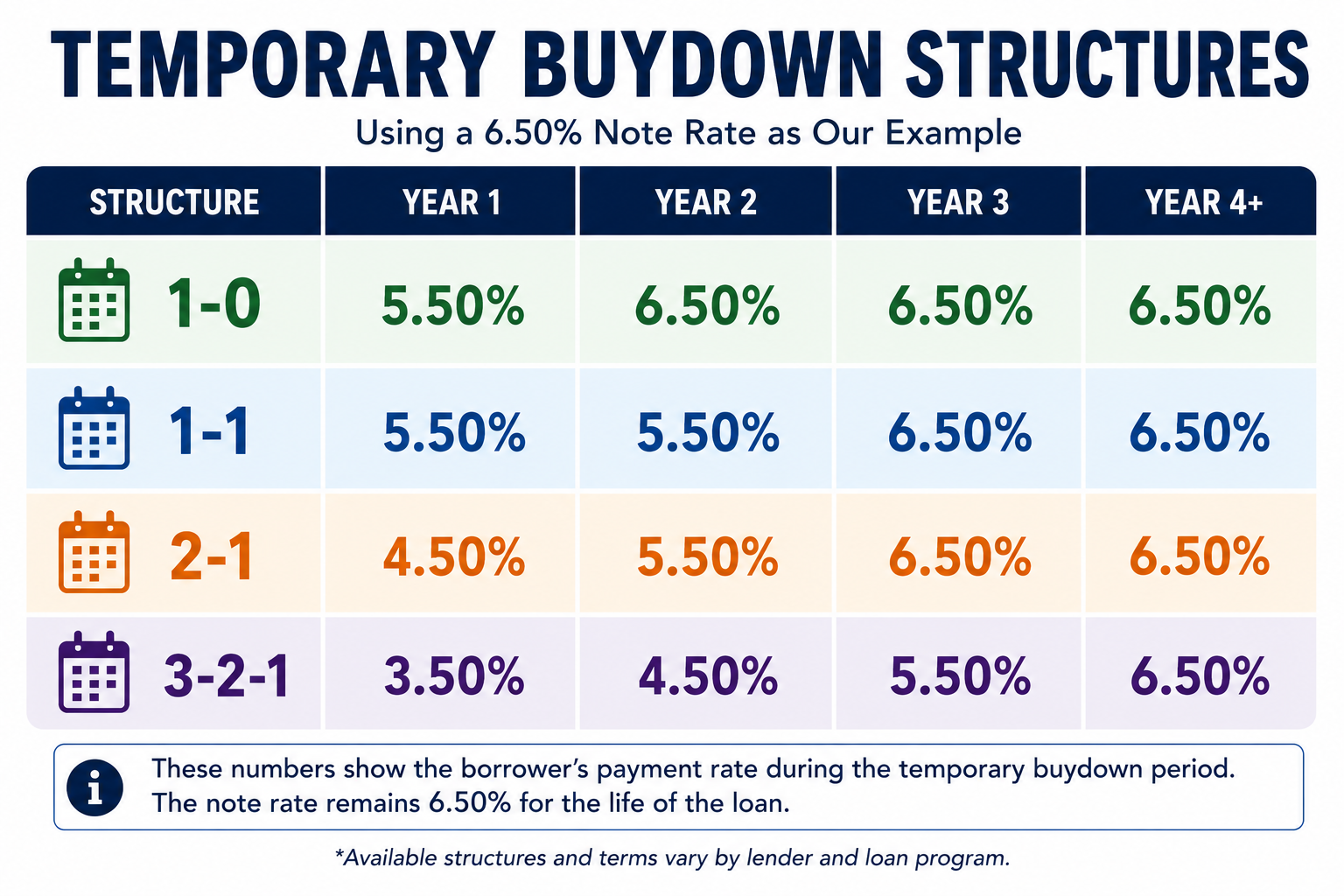
Make it stand out
These numbers simply show how much the borrower’s payment rate is reduced—and for how long—before returning to the full note rate.
What Does This Do to the Payment?
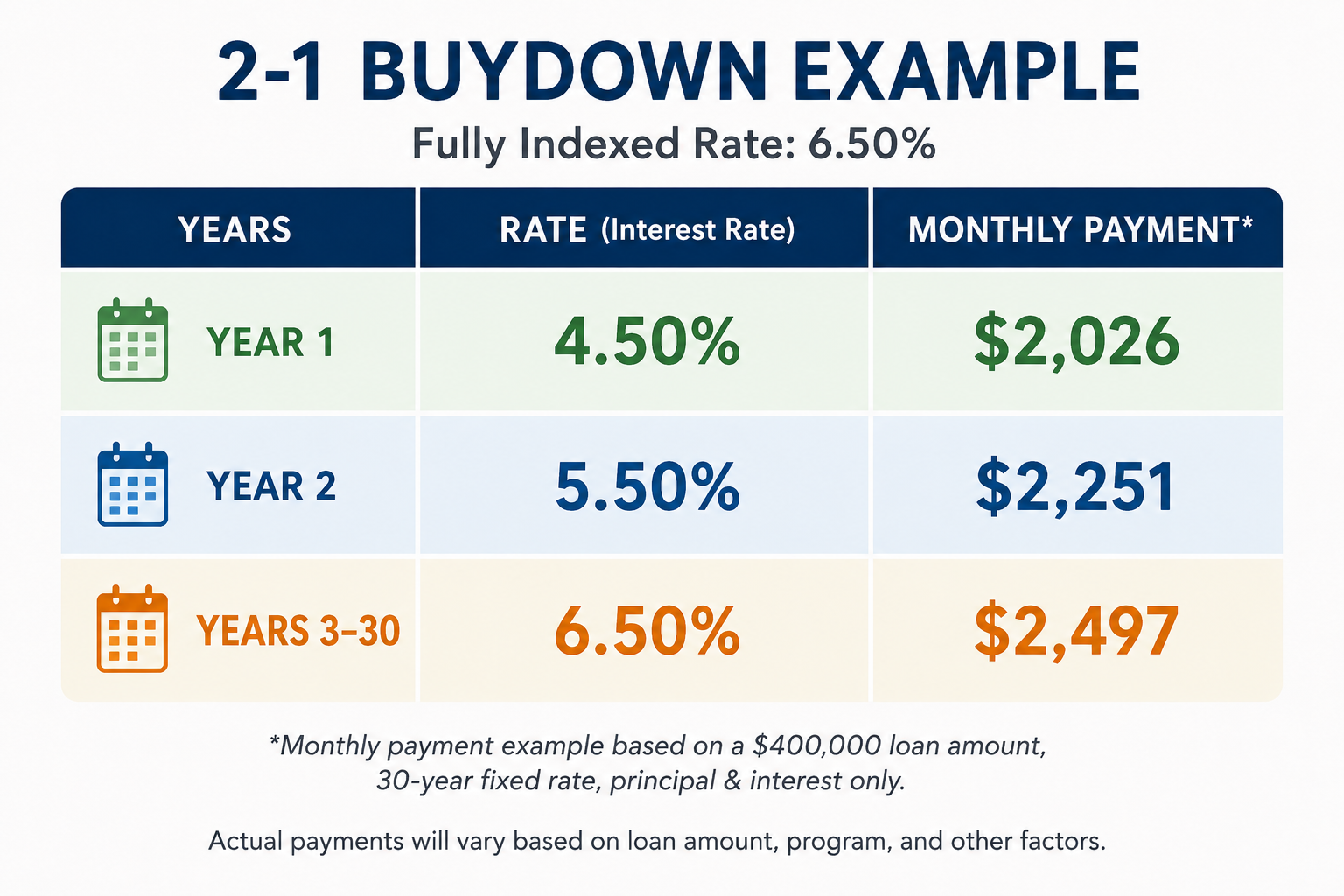
The monthly payment is temporarily reduced for each yearly increment.
Who Pays for It - and What Does It Cost?
Temporary buydowns are most commonly funded by the seller, often as part of a negotiated seller concession. Depending on the lender and loan program, borrower-paid and lender-paid options may also be available.
The cost of the buydown isn't a set fee or percentage. It is calculated based on the loan amount, note rate, and temporary rate reduction. The calculation determines the amount needed to subsidize the difference between the borrower's reduced payment and the full payment during the buydown period.
The funds are collected upfront and placed into a buydown account. Each month, a portion of those funds is applied to make up the difference between the borrower's reduced payment and the payment due under the note.
In simple terms: The greater the payment reduction and the longer it lasts, the more money that must be deposited upfront to fund the buydown.
Funding sources, available buydown structures, and program requirements vary by lender and loan program.
Sell or refinance before the buydown ends? Any unused funds are generally applied according to the buydown agreement, commonly as a credit toward the loan payoff.
So When Does It Make Sense?
A temporary buydown can be a useful option when a buyer wants lower mortgage payments during the first few years of homeownership, particularly when the buydown is being funded by the seller, builder, or lender.
It may be worth considering when:
Cash flow is important early on. Moving, furnishing a home, repairs and other expenses often make the first year or two more expensive.
A seller is offering a concession. Using some of that money for a temporary buydown can provide an immediate monthly payment benefit.
The buyer expects their financial situation to improve. Income growth, paying off other debts, or other anticipated changes may make the future full payment easier to manage.
The buyer hopes to refinance later. If rates decline, refinancing may become an option—but future rates and refinancing should never be assumed or guaranteed.
There isn't one “best” buydown structure. The right approach depends on the loan, available concessions, how the buydown is funded, and the buyer's individual circumstances. Sometimes using funds toward closing costs or a permanent rate reduction may make more sense—which is why it's worth comparing the options side by side.